
Mitigation planting case studies

Over 5,000 metres of hedging and 720 trees planted so far.
By collaborating with landowners across the programme area Mend the Gap has been able to plant over 5000m of hedging and 720 trees up to 2026. Thank you to our partners at FWAG South East (Farming and Wildlife Advisory Group) for their work with landowners to create over 5 kilometres of new and improved habitat for our native wildlife. This habitat provides not just a place for birds, mammals and invertebrates to live, but acts as a food larder and safe corridor for movement between different wild spaces, and improves flood resilience in winter.
Each year all of the new trees we have planted are monitored as part of the programme’s commitment to ensuring they thrive. Failed whips (young trees) are replaced, and protective (biodegradable) guards renewed as necessary.
The planting is a mix of native species, including 50% hawthorn, 10% blackthorn, and a combination of other native species such as Hazel, Holly, Dog Rose, Wayfaring tree, Spindle, Wild Privet and Field maple.
Here are some of the places that we have worked so far:
South Stoke
We began our mitigation planting in South Stoke parish in 2022, and planted 990m of hedge and 71 trees in 2022.
In 2025 we revisited South Stoke and planted over 1000 metres of hedge along the main road, working in conjunction with Oxfordshire Highways and the Parish Council. This will not only reduce the visual impact of the gantries but will have the added benefits of reducing soil erosion and increasing habitat for natural pollinators and animals. It will also become home to a range of animals and plants that have lost their place in this landscape.
A total of more than 2.5 km of new hedgerow has been planted and over 100 trees.

Hedge on the road, to shield the railway gantries at South Stoke, near Reading
Moulsford to Didcot
In 2024/25 we worked with landowners in South Moreton to infill some of the great planting they had already done and supported them to navigate around the gas pipe, the presence of which does mean that some views will be harder to mitigate against.
In 2025/26, we worked in the direction of Didcot. The more open arable landscape around Cholsey and South Moreton brought a different set of challenges, but landowners have been positive, practical and constructive in helping us find the right planting opportunities. Over 100 trees and 0.5km of hedgerow has helped mitigate the visual impact from the railway gantries here.
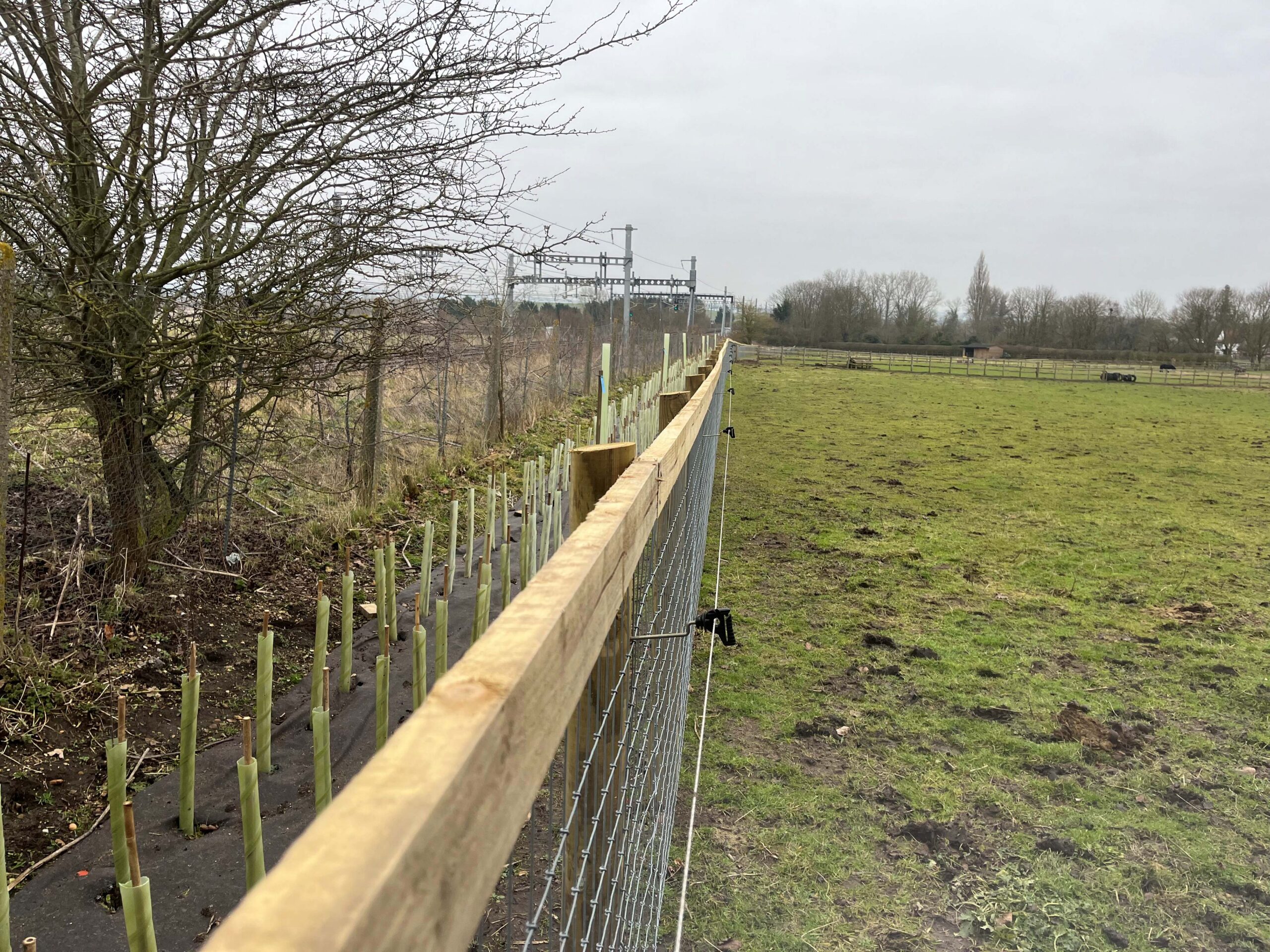
Gatehampton, Goring
At sites around Gatehampton, Goring, around 750m of new hedging and over 40 standard trees have been planted.
The landowners have worked together to make sure the screening is connected, to provide optimum impact both visually and for wildlife.

Sheepcot recreation ground
At Sheepcot recreation ground in Goring, owned by the parish council, some 200 metres of native hedgerow and several standard beech trees have been planted by the Mend the Gap programme.
This planting aims to break up the view of the gantries, without blocking the views of the National Landscapes from the well used public space.
Unfortunately, the beech trees did not survive, but the hedge is doing well on this site.

Cholsey
In 2024 we began to work with Landowners in the Cholsey area, to explore how we can sensitively plant this landscape that currently has very few hedges. We began with 200m of hedge near Cholsey.
FWAG have continued to work with landowners to extend the planting across this landscape, and we are mainly planting trees that are sympathetic to the farm cropping needs and landscape character.
Child Beale Trust
The Child Beale Trust owns an area of land around Lower Basildon that runs alongside the road and railway. Mend the Gap has supported them to infill and mitigate the impact of the gantries by restoring existing hedgerow in 2023.
The Child Beale Trust agreed further planting in 2024 and 2025, which continued to reduce the impact of the gantries from both Hartslock Nature reserve and the Holies above Streatley.
Purley and Sulham Estate
In 2024/5 we planted over 300 trees on two sites which have a significant impact on the views from both Purley and Pangbourne communities.
The woodland has taken well on this wet field, and the landowner will continue to manage it for the long term.
Signature Trees
We have now planted over 100 signature trees from three key native species, as identified in a Mend the Gap report from tree specialist Jonathan Spencer. The signature trees, which are plant in agreement with landowners are:
- Wild Pear – nationally rare, it appears to like the more protected and fertile planting sites in our area
- Disease resistant Elm – supporting the white letter hairstreak butterfly (once present in larger numbers in this area), these trees have taken well
- Black Poplar – nationally rare, it likes wet the places away from the railway
We are working with landowners and local volunteers to increase identification skills of these trees and make sure the records held by the Thames Valley environmental record centre (TVERC) are more accurate.
What next?
In the 2026/7 planting season for the Mend the Gap programme we will continue to maintain the new planting from 2025 and 2026, knocking back any unwanted shoots in the autumn and replacing small plants (whips) that do not survive the summer. We are also planning further planting from Didcot to Cholsey and hope to revisit sites that can be seen from the Holies and Hartslock nature reserve, to address the iconic views across the Goring Gap. We would still like to hear from landowners in the area who could support our work to reduce the impact of the Gantries across this landscape.
If you own or manage land that you would like us to consider for mitigation planting please get in touch at mendthegap@chilterns.org.uk