Beale Park
Mend the Gap is funding Nature Recovery at Beale Wildlife Park.
Beale Park Nature Recovery
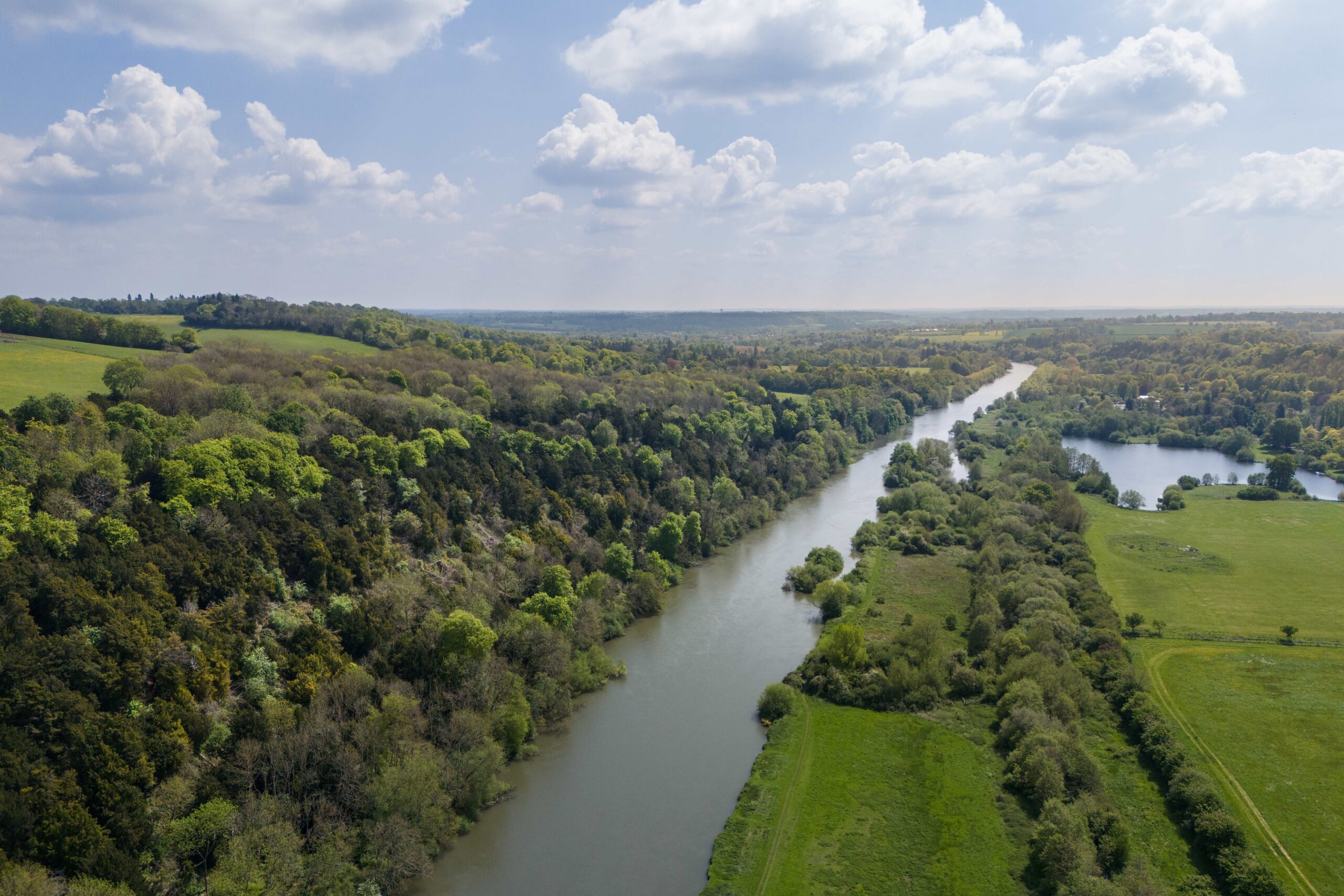
Beale Park manages over 100 hectares of land that was once part of the Basildon Estate. As well as the Wildlife Park, the grounds include a long strip of riparian land beside the River Thames. This has the potential to be restored to wildlife rich habitat.
In 2024 Beale Park commissioned Future Nature (an arm of the Berkshire, Buckinghamshire and Oxfordshire Wildlife Trust) to survey and give recommendations on restoration options. Following the report it applied to Mend the Gap to fund the following works.
Throughout this work Beale Park aims for:
- Ecological integrity to be maintained and enhanced.
- Logical sequencing of works to prevent conflicts (e.g. tree works will avoid key bat roosting periods).
- Long-term monitoring to be built into routine estate management.
Tree Condition and Canopy Continuity is put in place
Beale Park will be carrying out a tree survey across the estate and designing a management plan that will aim to see at least 70% of the canopy restored to native species, which are better for wildlife.
This will be done in a way that maintains continuous canopy, acknowledges the presence of veteran features and those in healthy condition, and minimises the disturbance to other wildlife.
Beale Park’s approach:
- Conduct a tree survey to map health, species, canopy cover, and veteran features.
- Implement a pollarding rotation for some willow pollards, following Future Nature’s 20-year cycle, with 1/7th pollarded every 3 years.
- Undertake tree works between Sept–Feb, outside the bird nesting season and after bat roost surveys.
- Retain standing and fallen deadwood for biodiversity.
- Replace any lost native trees with like-for-like species.
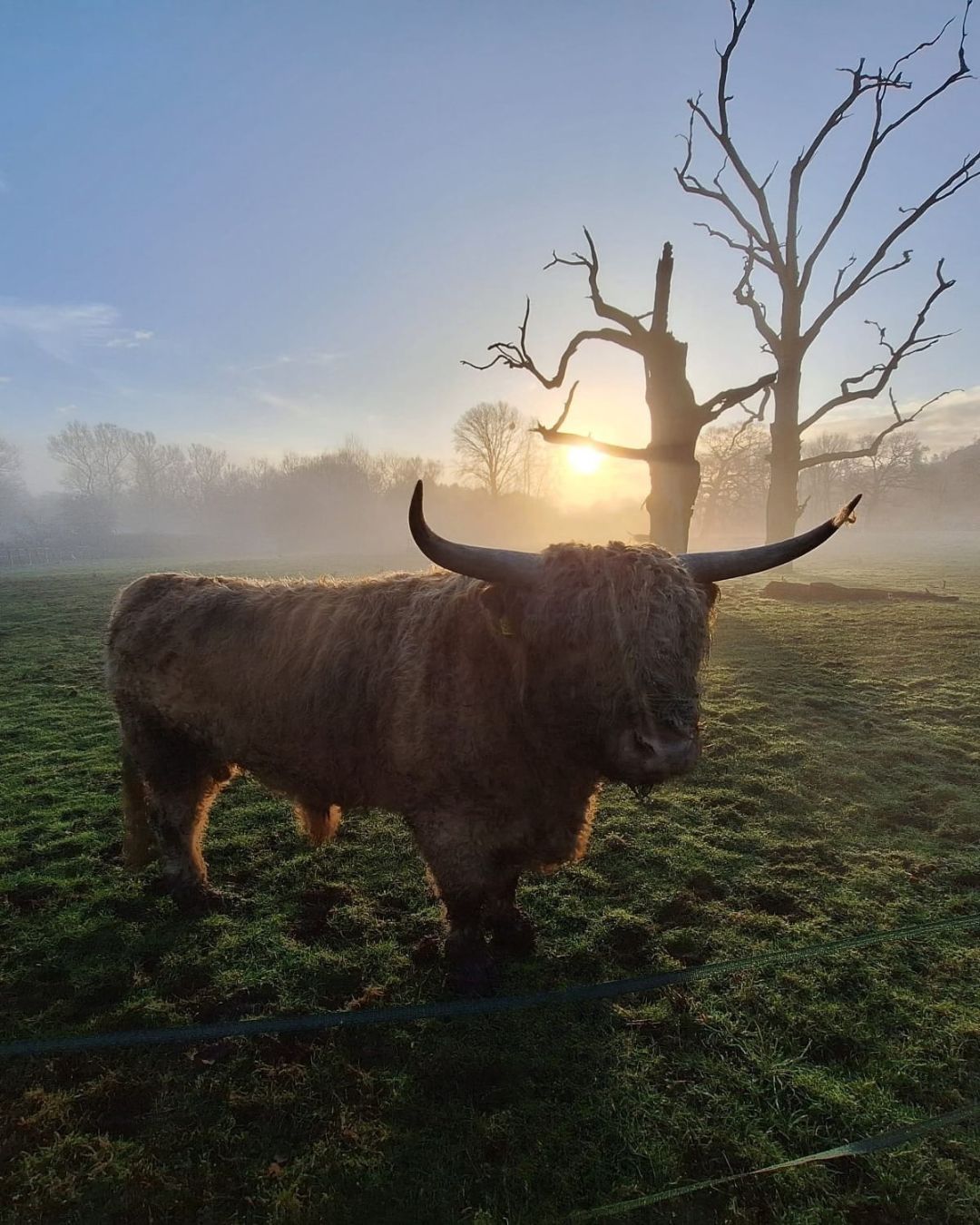
Highland Cattle will graze the side of the Thames improving habitat structure
Future Nature advised low-intensity management to maintain open sward and anthill integrity in the triangular field to the south of the estate.
Beale Park’s approach:
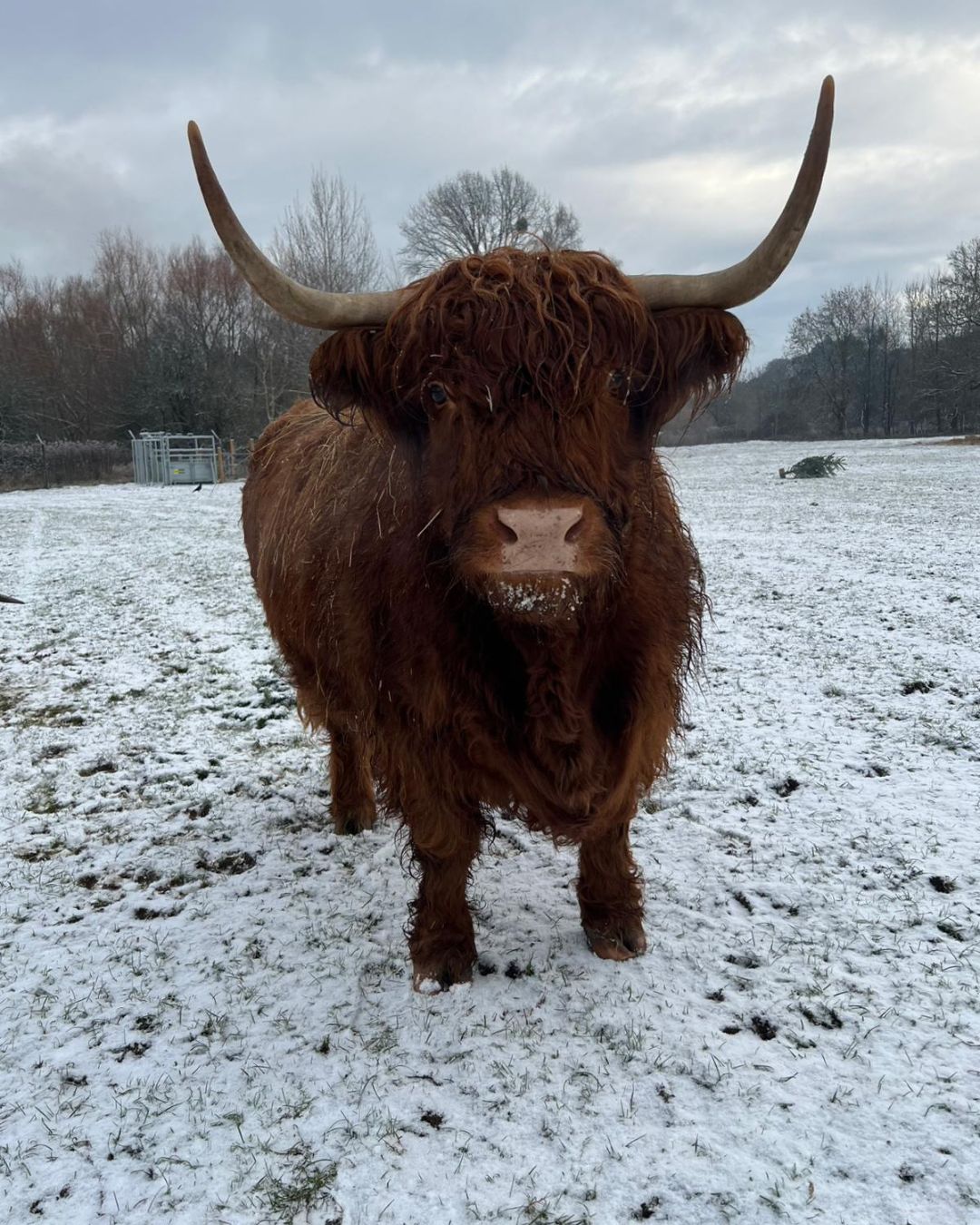
- Rare Breed Highland Cows Rosie and Hamish will have more grazing space by the river
- Create a secure quarantine paddock that can be used to trial grazing near to the river, with controlled low intensity cattle grazing mid-July–late September
- Remove cattle if sward height falls below 5cm or ground conditions become too wet.
- Use rotational grazing to avoid overgrazing.
- Explore how and if they can expand this grazing to other riverside habitats.
Volunteering Opportunities
Invasive Species Control
Future Nature highlighted the need for Himalayan Balsam clearance to protect habitat quality.
Beale Park’s approach:
- Working with volunteers and staff, remove Himalayan Balsam annually in late summer before seed set.
Specialist Surveys
Future Nature’s objectives aligned with Beale Park’s commitment to targeted species and habitat monitoring.
Beale Park’s approach:
- Bat surveys ahead of tree works to identify roosting potential and ensure legal compliance.
- Water vole surveys every 3–5 years to assess riparian habitat condition.
Monitoring and Public Engagement
Future Nature recommends monitoring to track ecological change.
Beale Park’s approach:
- Fixed point photography every 1st July to track visual changes.
- Visual Tree Assessments annually in August.
- Display monitoring outcomes via interpretation panels and volunteer engagement days.
If you want to know more or would like to volunteer with Beale Park please visit their website and visit the contribute pages.
Look out for Rosie and Hamish